

Understanding Dissociation and the Nervous System
Dissociation can be understood as a temporary disconnection from thoughts, emotions, sensations, or identity. It is the nervous system’s way of protecting us when an experience feels too overwhelming to process in the moment. While it can feel distressing, dissociation often begins as a survival response, not a flaw.
The autonomic nervous system plays a central role in this process. According to Polyvagal Theory, our body continually scans for cues of safety and danger. When we experience chronic stress, trauma, or sensory overload, the nervous system may shift into a “freeze” or “shutdown” state to preserve energy and reduce perceived threat.
For many neurodiverse individuals, these freeze and shutdown states may occur more frequently. Chronic sensory overload, social exhaustion, and emotional intensity can all activate the body’s protective mechanisms, making it difficult to remain fully present or connected.
Dissociation in Neurodiverse Populations
Emerging research suggests that dissociation is more common among autistic and ADHD individuals, as well as those with trauma histories. Autistic adults, especially those who are late diagnosed, often describe feeling “disconnected” during overstimulation or social fatigue that unsupported can lead to burnout.
Studies validate the strong link found between autism and alexithymia, the difficulty identifying and describing emotions. Alexithymia can contribute to dissociative experiences. This overlap highlights that for many neurodiverse people, dissociation is not just “spacing out”, but a nervous system adaptation to distress and overstimulation.
Chronic invalidation, masking, or being told to “just try harder” can reinforce this cycle. When the nervous system is persistently pushed beyond its limits, dissociation becomes a learned form of protection. While current research supports a connection between neurodiversity and dissociation, the field is still developing, and much remains to be understood about why these overlaps occur.
Click below for
The Atypical View Podcast
on this topic:

Mindfulness Supports Dissociation, but Nervous System Regulation Must Come First.
Mindfulness and grounding are often recommended to manage dissociation, yet these practices can sometimes worsen anxiety or panic if attempted while highly dysregulated. Before we can reconnect to the present moment, we must first help the nervous system feel safe enough to do so.
Imagine your dysregulation like a traffic stop light:
- Red = Very Dysregulated.
- Yellow = Sort of Dysregulated.
- Green = Regulated.
At The Atypical View, we often introduce a generalized regulation model using three tiers of coping strategies that correspond to different levels of nervous system activation. When you want to attempt to regulate using these methods first check your regulation and it’s correlating Stoplight Color. Then, If you’re in the red, start with step 1, if you’re in the yellow, start with step 2, and if you’re in the green, move straight into step 3.
- Red– Distraction-Based Strategies: When the nervous system is in full distress, focus on gentle distraction to lower intensity.
Try:
- Calling a trusted friend
- Engaging with fidget toys or a creative hobby
- For a quick approach, try shocking your system with a piece of sour candy!
After trying 1-2 techniques here, move to step 2.↓
- Yellow (Somatic-Based Strategies): As activation lowers, we transition to using our body to regulate our nervous system. This is less about the sensory experience happening in our body, and instead utilizing repetitive movement to trigger regulation.
Try:
- Try giving yourself a tight hug or get a bear hug from a loved one
- Putting on a song to dance and wiggle your body to
- Attempt therapeutic tapping with some slow breaths(see Image A at the bottom of the article)
After trying 1-2 techniques here, move to step 1.↓
- Green(Mindfulness and Grounding-Based Strategies): Once more regulation is established, grounding and mindfulness become more accessible. This is where we tune into the sensory experience. Which means we can safely target dissociation.
Try:
- Engaging your senses, such as sight by describing an object near you in great detail such as its colors, patterns, shape, texture, etc.,
- Going barefoot outside and noticing how the earth feels under your feet
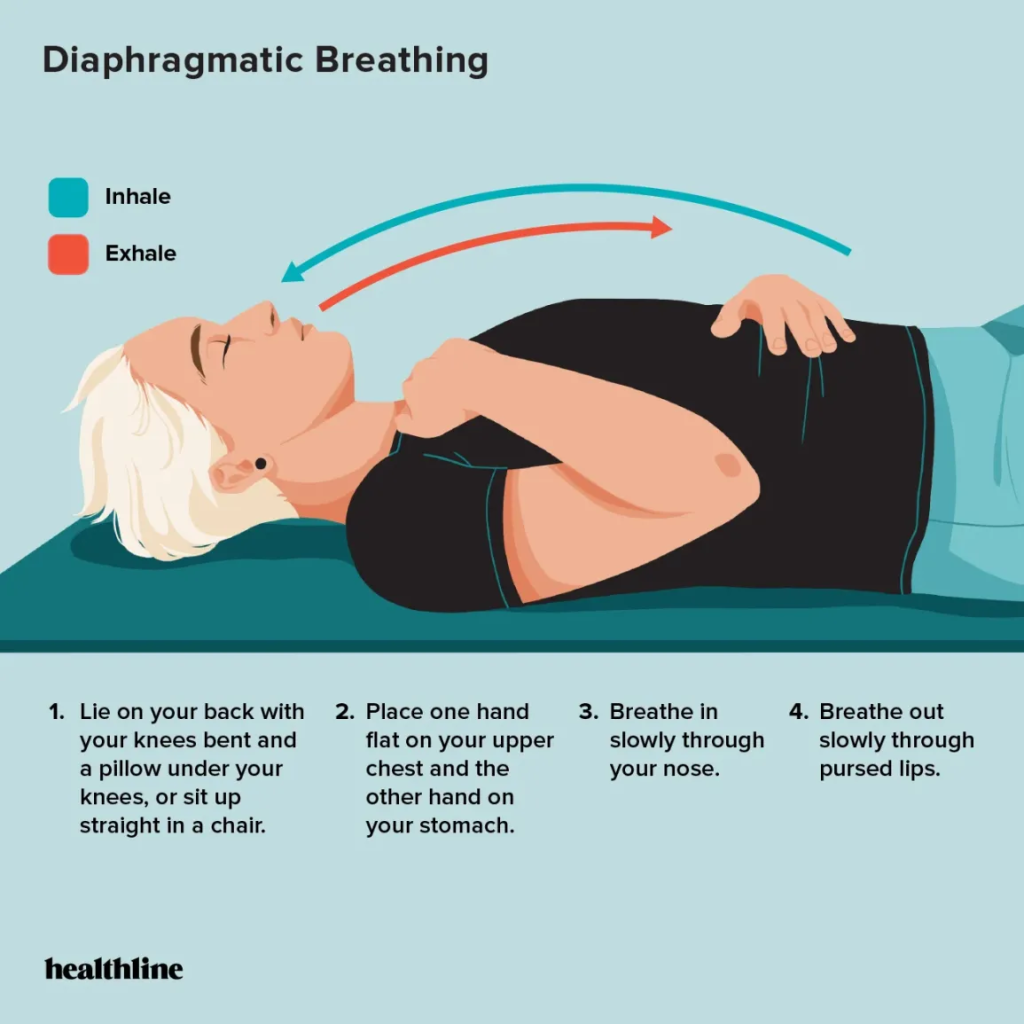
- Diaphragm breathing while feeling the air move through your body (see Image B at the bottom of the article)
Therapy and coaching support can help individuals learn when and how to move between these stages, expand their coping strategies and personalize their support. At The Atypical View, we modify nervous system regulation tools to meet each neurodiverse client’s unique sensory profile before integrating personalized dissociation support.
Healing begins not with forcing presence, but with creating safety in the body. From there, mindfulness becomes less of a task, and more of a return to self.
Research:
Levin, K. K., Gornish, A., & Quigley, L. (2022). Mindfulness and depersonalization: A nuanced relationship. Mindfulness, 13(6), 1479–1489. https://doi.org/10.1007/s12671-022-01890-y
Poquérusse, J., Pastore, L., Dellantonio, S., & Esposito, G. (2018). Alexithymia and autism spectrum disorder: A complex relationship. Frontiers in Psychology, 9, 1196. https://doi.org/10.3389/fpsyg.2018.01196
Stephen W. Porges. (2011). The polyvagal theory: Neurophysiological foundations of emotions, attachment, communication, and self-regulation. W. W. Norton & Company. https://doi.org/10.1037/2011-04659-000
Vancappel, A., Hingray, C., Reveillère, C., & El-Hage, W. (2023). Disentangling the link between mindfulness and dissociation in PTSD: The mediating role of attention and emotional acceptance.Journal of Trauma & Dissociation, 25(1), 52–68. https://doi.org/10.1080/15299732.2023.2231907
Image A:
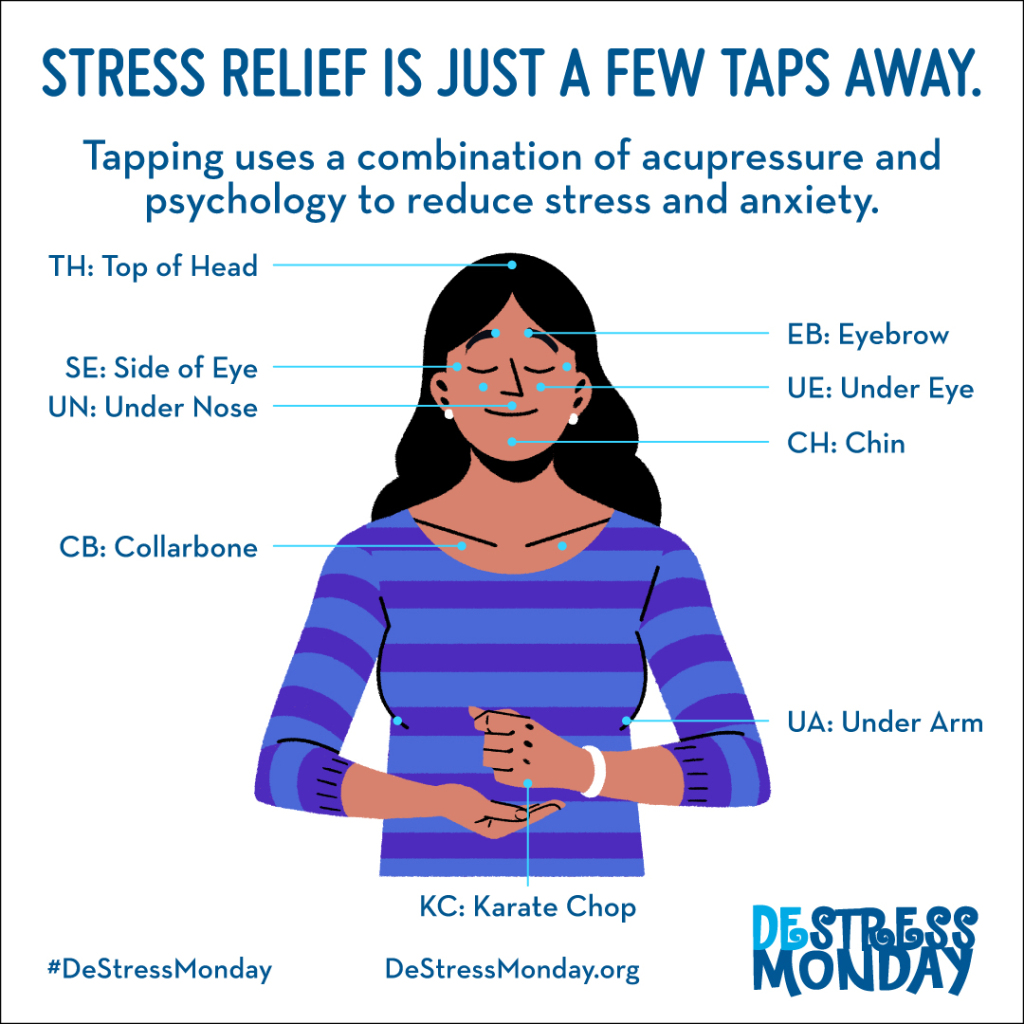
Image B:


1 Comment